MAY 2012
|

On May 2nd, 2012 San Francisco Interfaith Council hosted another amazing Congregational Disaster Preparedness Workshop for congregations of all faiths in San Francisco.
We were proud to be a small part of the conference!
We will feature an article about the workshop in our next months newsletter issue. Stay Tuned... |
|
|
|
REDISTRIBUTION OF WEALTH
by Siobhann Bellinger
| |
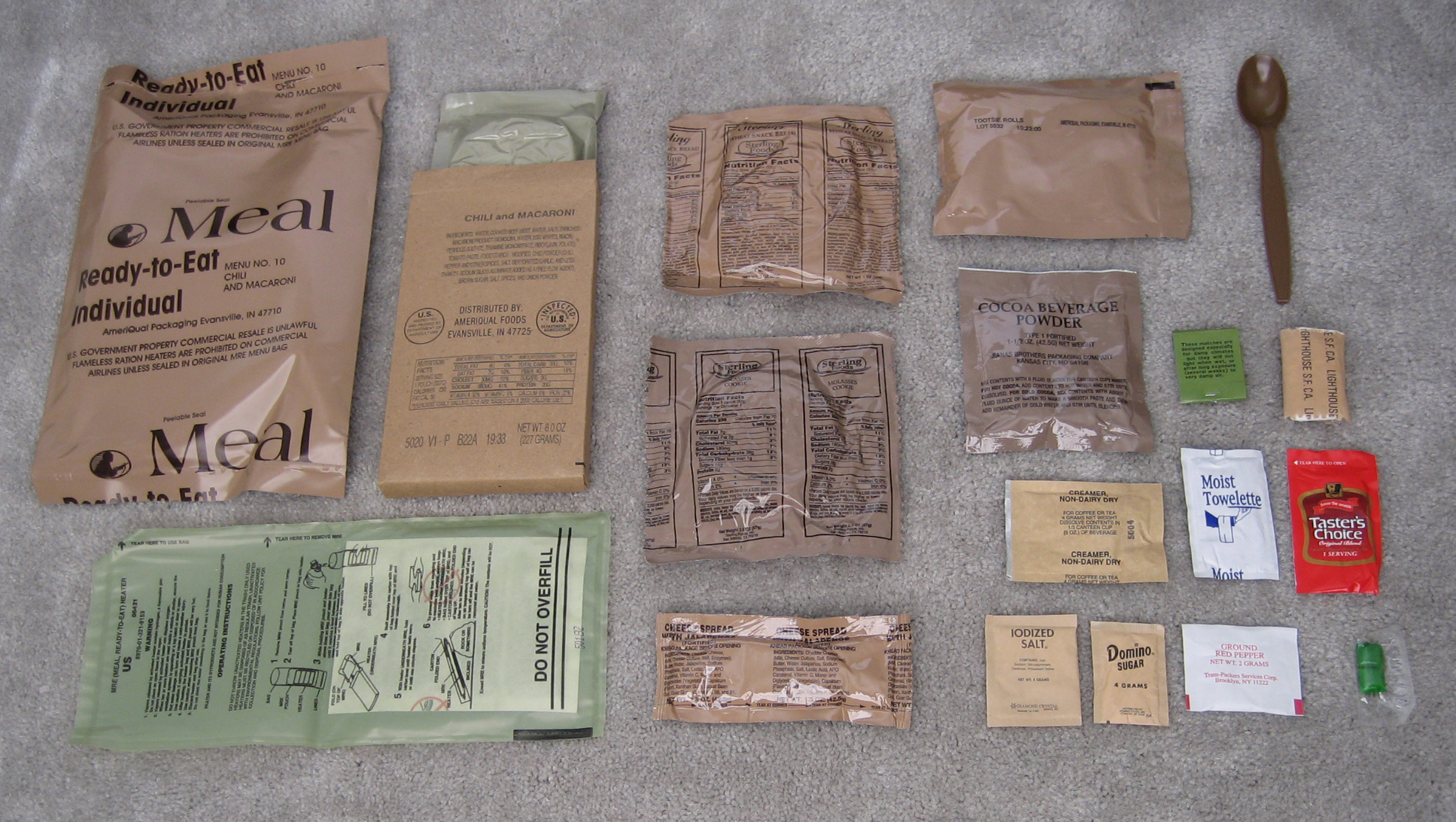
The UCSF Police Department, Homeland Security and Emergency Management Division (HESM) Director Chris Jones has deployed as a first responder to over 23 global disasters, including New York following the terrorist attack of September 11th, 2001, Hurricane Katrina and the aftermath of the earthquake in Haiti. He has EMS experience to spare, so he knows the best practices regarding emergency supplies - including that food reserves must be rotated out. In March he found his department with a large cache of MREs that didn't expire until the end of April, did they have to be wasted?
He did some research and had his team reach out to SF CARD a couple of weeks ago with this an exciting but time-sensitive offer - could we find a home for a large cache of MREs that were due to expire by the end of April 2012? MREs, or 'meals, ready to eat' are lightweight, individually packaged field rations used by the US military for situations in which food access is difficult and they work well for emergency rations.
With time of the essence, we naturally jumped at the opportunity to give these MREs to a good home while they could still be used. This made us think - why not find an agency working with people who are hungry today? After some research, Health Sector Program Director Elisabeth Whitney decided to explore agencies working with the homeless and found The Gubbio Project to be an enthusiastic recipient.
The Gubbio Project, run from the Saint Boniface Church in the Tenderloin District of San Francisco says in their Mission Statement that their role, 'to be a place for neighbors in the Tenderloin- 'to join together, connect and celebrate,' and that they seek 'to create a safe place for our homeless neighbors who find refuge in our Church.'
Connecting vital resources to people who can use them was exciting to all of the agencies involved. Speaking with Ami Jah, Mass Notification System Coordinator for HSEM, who collaborated with Elisabeth Whitney on this effort, shared that she doesn't believe that supplies that are still useful should go to waste when they could - and should - be targeted appropriately. And most importantly - used! This is a belief that is clearly shared by the entire HSEM team.
The Homeland Security & Emergency Management Division is responsible for implementing advanced emergency management protocols in support of UCSF's Emergency Plan, coordinating UCSF's Emergency Operations Centers, and providing all hazards emergency management and training, homeland security risk assessment, mitigation planning, business continuity planning and technology support for the UCSF Emergency Operations Center and you can find them here. Also on board are Herbert Cole, Emergency Preparedness Specialist, and Esther Silver, Business Continuity Program Manager.
Recently, SF CARD was contacted again with a request to find a home for supplies -this time by Fred Nowland of Nexis, a company that supplies emergency kits to many large businesses in the Bay Area. Familiar with our work, Fred thought we might be able to help him help two of his clients offload a huge stock food and water supplies - from a San Francisco site there are 24,000 water packets expiring in September and 800 food bars expiring in October available. From a Sacramento-area location there are an additional 14,400 water packets available.
If you work for or know of an agency that could benefit from donations such as these, don't hesitate to contact us today! Meanwhile, we at SF CARD are excited that the preparedness and response professionals at the UCSF PD HSEM and at Nexis are interested in continuing to collaborate with us in the future as we try to connect still-viable supplies with folks in need.
|
Coffee Talk - After Thoughts
| |
The calm before the storm. The beautiful room at SPUR before everyone arrived to Coffee Talk.
The last coffee talk was a huge success. Held at SPUR last Friday (May 9th), over 17 organizations were represented.
Our gathering was kicked off by a fantastic presentation from Noah Christman. As their Public Programming Manager, Noah was responsible for coordinating the "Safe Enough to Stay" exhibition that recently ended. Noah's coffee talk presentation not only discussed what SPUR's mission is but also background on the organization. Noah then specifically discussed the "Safe Enough to Stay" exhibition and covered some of the key points and takeaways from the exhibition. One of the coolest aspects Noah discussed about the exhibition was that the SPUR Urban Center gallery was transformed to a post-earthquake state. It allowed visitors to see what damages an earthquake might cause and discover what materials we will all need to survive as we shelter in place in a San Francisco studio apartment. In addition the exhibition also featured a simulation of a neighborhood emergency center, which would provide essential services and information for residents who remain in their homes.
Once Noah had completed his talk, we took a break and Brian Whitlow (SF CARD Program Manager) challenged everyone during the break to meet a new person. For over 10 minutes, attendees mixed and mingled. The participation was outstanding and everyone was engaged in some great discourse to the point where Brian had to get their attention. Then we transitioned to our featured speaker of the morning, Amy Bach Executive Director of United Policyholders.
Amy not only talked about the mission and great work done by United Policyholders, she discussed in great lengths about the importance of insurance and how an organization should utilize some basic tools to address key insurance areas. The guidance Amy gave helped everyone focus on why it's important to prepare through the insurance lens and what were some past lessons she learned from previous disasters her organization has responded to. The two takeaways I received from Mrs. Bach were (1) that preparing insurance materials before something happens expedites an organization's recovery time and (2) you must personally be proactive throughout the recovery process.
The day ended with Brian accentuating the points that coffee talks are a great opportunity to make contact with new members from the community of preparedness and using local emergencies to work on collaborative efforts is a great way to practice for a larger disaster.
SF CARD would like to express a huge thank you to Noah & SPUR for hosting the event and to Amy for being a fantastic presenter and for passing along some great information to our community!
For more information about the exhibition "Safe Enough to Stay", please visit http://www.spur.org/exhibitions/safe-enough-stay. You will also be able to download for free the major report that accompanies the exhibition, click here http://www.spur.org/files/event-attachments/SPUR_Safe_Enough_to_Stay.pdf.
For more information on United Policyholders, visit http://www.uphelp.org.
|
SF CARD's Newest Team Member
Ai Lin Morten
|
 Ai Lin Morten is a native-born San Franciscan. She attended San Francisco private schools and City College of San Francisco where she got an AA in Political Science and International Business Certificate; she then attended and graduated from Notre Dame de Namur University in Belmont, California. At NDNU, she studied and received a BA in Political Science, and minors in both Communications and Business. She enjoys traveling and has traveled to over 20 countries around the world. The travel bug started when her parents took her at a young age to Mexico, and continues to this day. She has hiked the Inca Trial and climbed Machu Picchu in Peru, river rafted on the Urubamba River and in Class 4 rapids on the Amazon River, and climbed Mt. Kinabalu (the tallest mountain in Southeast Asia) in Sabah, Malaysia. Other adventures included participating in voluntourism (volunteer travel) in Baldan Baraivan, Mongolia. The latter trip was part of a cultural restoration project to restore a Buddhist Monastery destroyed by the Russian Communist in 1937. Before leaving for the voluntourism trip, her San Francisco Giants' Guest Services colleagues (in View Level) helped her to collect San Francisco Giants National League Champion 2002 Cups for the CRTP Mongolian staff. They were excited about their new gifts when those cups were passed out to them. They used the cups to drink mare's milk and goat yogurt. This was an incredible experience. All of Ai Lin's travels have been a great learning experience, enabling her to see first-hand how countries, cultures and people are like. She has been playing the piano since she was five, loves to sing and currently is learning how to play the guitar. Her work experiences originate from the restaurant, non-profit, banking and government sectors. She has worked at an Italian Pizza Parlor, at the Union Bank of California's Human Resources Corporate Benefits Department, and The Salvation Army Golden State Divisional Headquarter's Human Resources Department. Before coming to SFCARD, she worked at Treasure Island Job Corps Center in Administration Department. In 2010, she started working for the San Francisco Forty-Niners in Ticket Services; during her first year working with Cirque du Soleil as an usher, ticket and stage guard when Cirque du Soleil: Totem performed in San Francisco. She has been working for the San Francisco Giants in Guest Services for 14 years. She worked the 2002 and 2010 World Series, as well as attending both the 2007 All Star Game and the World Series in 2010 as a fan. Ai Lin is working at SF CARD in an administrative capacity and is a wonderful addition to the SF CARD team! |
Health Corner Asian Tiger Mosquito - A Potential Public Health Disaster
By Elisabeth Whitney, CBCP, MPH&TM, MNA
|
The Asian Tiger mosquito may be moving into our area, and it can transmit new diseases that we haven't had to deal with before. The Asian Tiger mosquito has been shown to be a possible vector, or carrier, of over 30 viruses, although not all these viruses strike humans. It can spread diseases such as chikungunya, dengue fever, yellow fever and encephalitis. While it may not cause epidemics, we may start seeing some unusual diseases in the Bay Area more frequently than the rare, infected returning traveler from an exotic place. Once the mosquito is established in our area, it will be very difficult to eradicate.
The Asian Tiger mosquito is believed to have first entered the United States in Houston, Texas in 1985 (inadvertently imported with tires from Asia). The Santa Clara County Vector Control District effectively eradicated two invasions of the deadly bugs in Gilroy in 2001 ("lucky bamboo" from Southeast Asia in a greenhouse) and again in Mountain View in 2003 (another greenhouse). The Asian Tiger mosquito was discovered in Los Angeles County on December 28, 2011 and again in mid April, 2012 in the City of South El Monte just west of Los Angeles. That is the big problem with cargo and people being so mobile now. Although this mosquito never travels further than ½ mile of where it breeds, Spring is a prime time for this invasive pest to appear.
The Asian Tiger mosquito is a real game changer because it is a container breeder, which means it will breed in any container - from a saucer with a quarter inch of water, to potted plants, anything that holds water.
The female Asian Tiger mosquito is an aggressive and persistent, daytime biter. It is black with white bands. A more common local mosquito looks similar, but doesn't have the single black stripe on its back.

Source: http://peninsulapress.com/2012/04/25/invasive-mosquito-bites-like-a-tiger-looks-like-a-zebra/mosquito1/
Vector Control is asking for your help. What to do if you find this mosquito in your backyard? Please call the numbers listed below.

Source: http://peninsulapress.com/2012/04/25/invasive-mosquito-bites-like-a-tiger-looks-like-a-zebra/screen-shot-2012-04-24-at-5-04-53-pm/
Here is some information on some diseases we could start seeing regularly if this mosquito becomes established in our area.
La Crosse encephalitis virus
La Crosse encephalitis virus (LACV) is transmitted to humans by the bite of an infected mosquito. Most cases of LACV disease occur in the upper Midwestern and mid-Atlantic and southeastern states (see map). Many people infected with LACV have no apparent symptoms. Among people who become ill, initial symptoms include fever, headache, nausea, vomiting, and tiredness. Some of those who become ill develop severe neuroinvasive disease (disease that affects the nervous system). Severe LACV disease often involves encephalitis (an inflammation of the brain) and can include seizures, coma, and paralysis. Severe disease occurs most often in children under the age of 16. In rare cases, long-term disability or death can result from La Crosse encephalitis. There is no specific treatment for LACV infection-- care is based on symptoms. If you or a family member have symptoms of severe LACV disease or any symptoms causing you concern, consult a healthcare provider for proper diagnosis.
The best way to reduce your risk of infection with LACV or other mosquito-borne viruses is to prevent mosquito bites. Use insect repellent, wear long sleeves, long pants and socks or even stay indoors while mosquitoes are most active. The mosquitoes that spread LACV are most active during the daytime.
California Serogroup Virus Neuroinvasive Disease Cases* Reported by State, 1964-2010

*Neuroinvasive disease includes cases reported as encephalitis, meningoencephalitis, or meningitis. Most reported cases of California serogroup virus neuroinvasive disease are due to La Crosse encephalitis virus. Cases are reported by state of residence.
Chkungunya fever is a viral disease transmitted to humans by the bite of infected mosquitoes. Chikungunya virus is a member of the genus Alphavirus, in the family Togaviridae. Chikungunya fever is diagnosed based on symptoms, physical findings (e.g., joint swelling), laboratory testing, and the possibility of exposure to infected mosquitoes. There is no specific treatment for chikungunya fever; care is based on symptoms. Chikungunya infection is not usually fatal. Steps to prevent infection with chikungunya virus include use of insect repellent, protective clothing, and staying in areas with screens. Chikungunya virus was first isolated from the blood of a febrile patient in Tanzania in 1953, and has since been cited as the cause of numerous human epidemics in many areas of Africa and Asia and most recently in limited areas of Europe.
Source: CDC http://www.cdc.gov/ncidod/dvbid/chikungunya/
Chikungunya is a rare viral infection transmitted by the bite of an infected mosquito. It is characterized by a rash, fever, and severe joint pain (arthralgias) that usually lasts for three to seven days. Because of its effect on the joints, Chikungunya has been classified among the Arthritic Viruses. It primarily occurs in tropical areas of the world.
With more than one-third of the world's population living in areas at risk for transmission, dengue infection is a leading cause of illness and death in the tropics and subtropics. As many as 100 million people are infected yearly. Dengue is caused by any one of four related viruses transmitted by mosquitoes. There are not yet any vaccines to prevent infection with dengue virus (DENV) and the most effective protective measures are those that avoid mosquito bites. When infected, early recognition and prompt supportive treatment can substantially lower the risk of developing severe disease.
Dengue has emerged as a worldwide problem only since the 1950s. Although dengue rarely occurs in the continental United States, it is endemic in Puerto Rico, and in many popular tourist destinations in Latin America and Southeast Asia; periodic outbreaks occur in Samoa and Guam.
Yellow fever virus is found in tropical and subtropical areas in South America and Africa. The virus is transmitted to humans by the bite of an infected mosquito. Yellow fever is a very rare cause of illness in U.S. travelers. Illness ranges in severity from a self-limited febrile illness to severe liver disease with bleeding. Yellow fever disease is diagnosed based on symptoms, physical findings, laboratory testing, and travel history, including the possibility of exposure to infected mosquitoes. There is no specific treatment for yellow fever; care is based on symptoms. Steps to prevent yellow fever virus infection include using insect repellent, wearing protective clothing, and getting vaccinated.
|
| Upcoming Events, Trainings, & Services | |
Upcoming Events and Trainings Spotlighted:
Schedule of FREE Trainings by SF CARD, 2012*
(*for nonprofits and faith-based organizations)
STAFF READINESS
The SF CARD Staff Readiness training course is designed to help the staff of nonprofit and faith-based organizations to individually prepare for a disaster. The class is presented using a workbook to enable students to complete several of the components of staff preparedness in the classroom setting. The SF CARD Preparing Staff for Emergencies Workbook covers the following:
- Education on Emergencies - "What to do when a specific emergency happens?"
- Getting your family prepared - Home and go-kits, mitigating your home & your surroundings, and identifying those things you love.
- Pre-planning for emergencies - Family Communication Plan, Evacuation Plan: Getting out of the House, and Rally Spot: Reunifying with a loved one.
- Exercises and Resources - How to use what you have, Whistle & Flashlight exercise, and resources for Information and Supplies. (This interactive class lasts for an hour.)
INCIDENT COMMAND SYSTEM
The SF CARD Incident Command System (ICS) training is designed to teach nonprofit and faith-based organization staff and volunteers how to use this nationally accepted and tested disaster response and management system. This course introduces the Incident Command System by describing the history, features, principles, and organizational structure of the Incident Command System. The training also uses a tabletop exercise to reinforce the learning objectives in a scenario setting.
(This interactive class lasts for three hours.)
All these trainings are free and will take place at SF CARD. The address is 1675 California Street, San Francisco, CA 94109 (in the Volunteer Center).
SCHEDULE OF TRAININGS 2012:
July 18th Staff Readiness training - 10 am - 12 pm
July 20th ICS training - 1 - 4 pm
October 17th Staff Readiness training - 10 am - 12 pm
October 19th ICS training - 1 - 4 pm
Please RSVP to Elisabeth Whitney:
elisabeth@sfcard.org (415) 955-8946 x 253
We look forward to seeing you then! Thank you.
_______________________________________________________________________________
If you're interested in finding out about other ongoing events, trainings, & services visit the following agency specific websites:
|
|
|
|
|
|
|